News

Green construction materials designed for extreme weather conditions
Tips

Which Building Materials Are Best Suited to Climate Change?

Climate change has altered the manner in which we build and construct buildings. The temperature rise, the increase in rain intensity, and the rise in storm size have forced architects and builders to look at the conventional manner in which buildings were built in the past. Today, the selection of building materials isn’t just based on the longevity and cost of the materials—it’s based on sustainability and the environmental impact of the materials as well.


In this new world of building and construction, sustainable and cost-effective building materials have emerged as the new heroes in the fight against the elements and the environment.

Why Building Materials Matter in a Changing Climate

Buildings are a major energy consumer, accounting for a large percentage of the total energy consumption of the world, and are a major source of the carbon emissions we produce. The materials used to build a building have a direct impact on the energy consumption of the building, the ability of the building to withstand adverse weather, and the lifespan of the building before it needs repairs or replacement.


The challenge of climate change presents a series of obstacles for buildings:

  • Increasing days of hot weather
  • Increasing rainfall
  • Increasing storms
  • Increasing humidity
  • Increasing need for energy efficiency


The right building materials can go a long way towards meeting these obstacles by improving insulation, protecting against moisture, and improving the solidity of the building even during adverse weather.

Concrete and Engineered Blocks

One of the most common building materials in the world is concrete. The latest innovations are taking this material further in the pursuit of climate-resilient architecture.


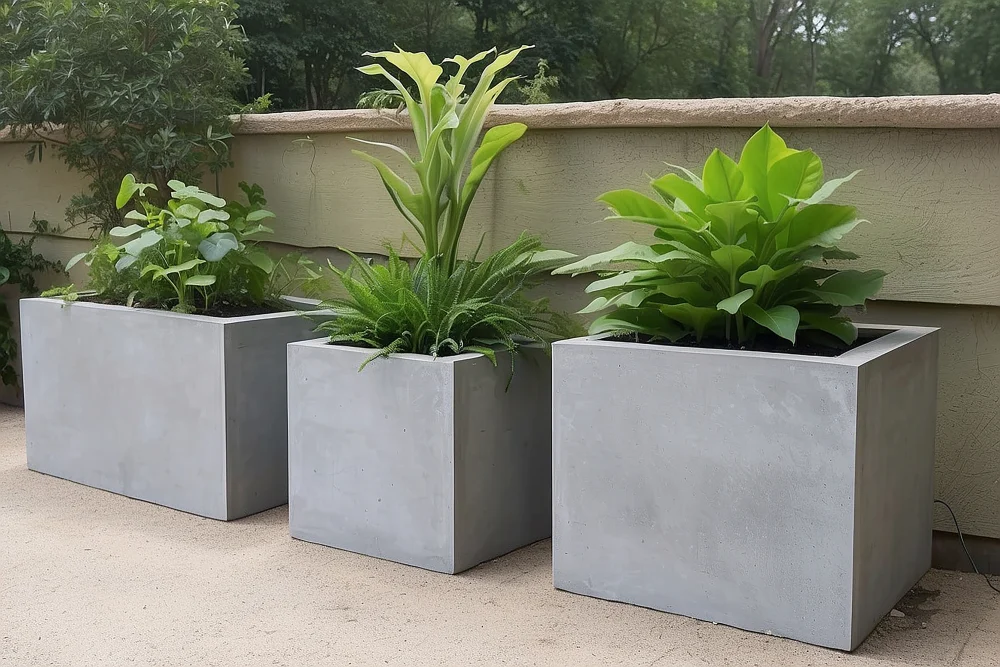
Quality concrete and blocks offer solid durability and strength, withstanding extreme weather, humidity, and rain—phenomena that are becoming more common with climate change. The material’s thermal mass is another advantage, as it absorbs heat during the day and releases it at night to regulate indoor temperatures and prevent over-cooling.

Well-designed concrete buildings offer affordable and effective solutions to building and long-term value, particularly in areas with harsh weather conditions.

Bamboo: A Rapidly Renewable Material

Bamboo has won international acclaim as a premier sustainable building material. Bamboo is known to grow at an unbelievable rate and is fully grown in as short a time as three to five years. 


Despite its light weight, bamboo is extremely strong and flexible. This gives it a high degree of resilience against earthquakes and high winds. Bamboo is used in many parts of the world for structural as well as aesthetic purposes.


Also, bamboo is a carbon sink when it is growing and helps to mitigate environmental impact.

Recycled Steel

Steel has always been known for its inherent strength and durability. However, the traditional method of steel production is energy-intensive and resource-constrained. Today, the use of recycled steel is a more transparent and environmentally friendly alternative.


Selecting recycled steel reduces the requirement for fresh mining activities and minimizes the environmental impact of steel production. At the same time, steel is one of the most durable materials used for constructing buildings. Structures made from recycled steel are able to withstand extreme weather conditions such as high winds and storms.

Fly Ash Bricks

Fly ash bricks are a standout material when it comes to cost-effectiveness and eco-friendliness. This is because they are made of waste matter collected from coal-based power plants, which would have otherwise been a threat to the environment. When fly ash bricks are compared to clay bricks, fly ash bricks offer several advantages. These advantages include greater durability, better insulating properties, less absorption of water, and a reduced negative impact on the environment. Additionally, fly ash bricks require less energy to produce, making them a more sought-after material for green building.

Insulated Glass and Energy-Efficient Windows

The issue of climate change is also leading to a need for buildings that are comfortable inside while using as little energy as possible. This is where insulated glass plays a crucial role. 

It is a fact that windows, whether they are made of double or triple panes, cut down on heat transfer. This means that during hot weather, the inside of a building remains cool without having to blast the air conditioning. The same is true during cold snaps. This makes energy-efficient windows a key part of sustainable building materials.

Green Roofing and Living Walls

Green roofs and living walls are becoming more popular in modern architecture, with many cities competing to find creative solutions to the problems of climate change. Green roofs are, in essence, roofs covered by plants, providing natural insulation against the sun’s rays. This helps to keep the interior of the building cooler, thereby reducing the phenomenon of the urban heat island, which affects many urban areas. Living walls, or vertical gardens, are a way of adding a touch of the natural world to the outside of a building. They are more than just a cosmetic addition, though, as they can help to clean the air and prevent the walls from becoming hot.

Locally Sourced Materials

Another good approach to sustainable construction is the selection of local materials. The transportation of construction materials over long distances tends to contribute to global warming and excessive energy consumption. By selecting materials that are locally available, you are contributing to the development of local economies and reducing the effect on the environment. In most cases, the materials are likely to match the local environment. In fact, most materials that are locally available were originally introduced to the region centuries ago.

Balancing Sustainability and Cost

The most common myth about sustainable building materials is that they are always costly. But the fact remains that many eco-friendly building materials can, in fact, become cost-effective building materials if their long-term benefits are taken into consideration. For example, durable building materials require less maintenance, while energy-efficient building materials require less electricity, leading to a reduction in costs over the lifespan of a building. If the total cost of a building, including the lifespan of the building, is taken into consideration, then it has been seen that sustainable building materials are the way to go.

The Future of Climate-Resilient Construction

As climate change challenges become more defined, the building industry has to respond more rapidly. There is a greater focus on building with long-lasting, long-enduring, and environmentally friendly building materials. At the same time, new tech is also providing opportunities. From carbon-capturing concrete to state-of-the-art insulation, the future of building is likely to combine protection against climate risks with minimizing environmental damage.

Final Thoughts

Climate change has changed the way we think about building today. The decision regarding building materials has become the most important decision that impacts the sustainability of the environment and the performance of the structure over its life cycle. By using sustainable building materials such as bamboo, recycled steel, and fly ash bricks, and focusing on cost-effective building materials that increase the longevity and sustainability of the structure, the construction sector can build structures that can withstand the challenges of the future.

Concrete Hollow Blocks The Best for Urban Projects
building products

Concrete Hollow Blocks: The Best for Urban Projects?

The Concrete Hollow Blocks have emerged as a norm in the modern world of construction, especially in a city where time, cost and performance are of prime importance. But do Concrete Hollow Blocks deserve to be ranked as the number one building material in city construction? Let’s look into the areas that make Concrete Hollow Blocks stand out, their applications of Hollow Blocks and whether they deserve to rank number one in city construction.

Why Urban Projects Prefer Concrete Hollow Blocks

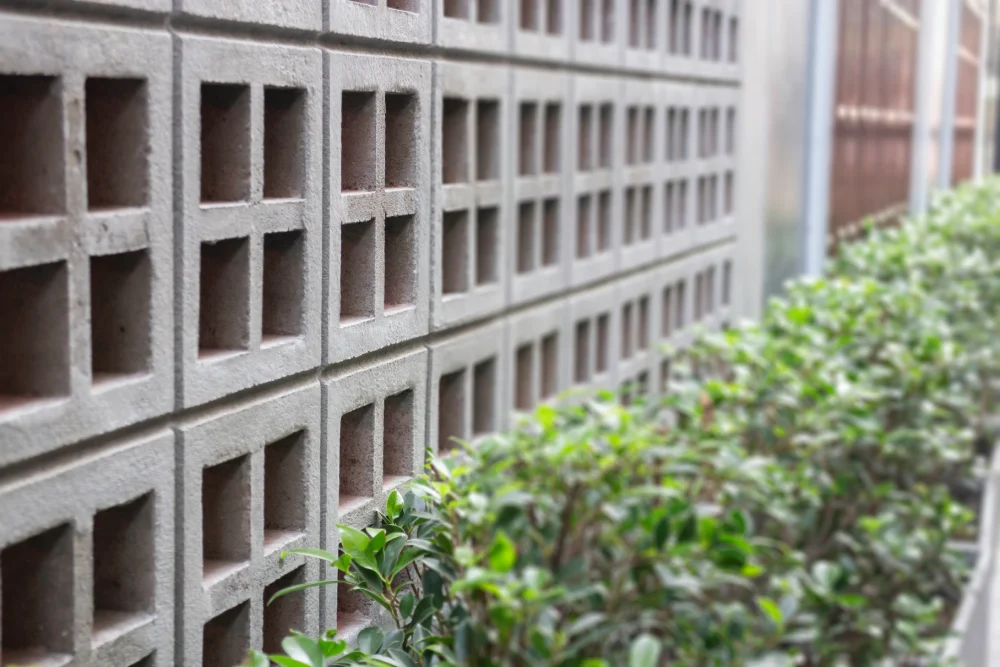
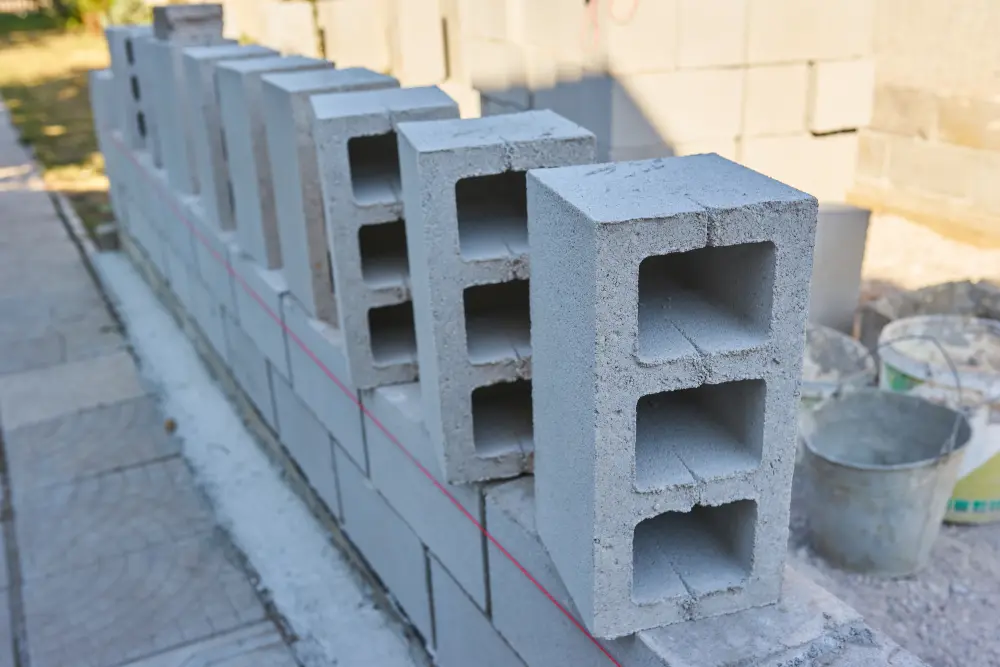
In a city, where construction is a never-ending task, it is of prime importance to complete a building within a short period of time, while keeping costs and performance in check. Materials like clay bricks have been in use for decades, but they come with a number of disadvantages, such as a slower rate of construction, increased labor costs and a lack of flexibility in use. This is where Concrete Hollow Blocks come into the picture, as they consist of cement, aggregate sand and water, combined in a particular proportion and have hollow cores, which make them different from other solid core building blocks.

One of the main attractions of using hollow blocks is their lightness compared to using solid blocks or bricks. This lightness results in reduced overall weight, which makes them easier to handle on site. In addition, this lightness reduces the dead load of foundations. In urban planning and construction, this is particularly important in the construction of high-rise buildings. This lightness of hollow blocks reduces the cost of reinforcement and foundation works. This is particularly important in urban planning and construction, where land is scarce and every square foot counts.

Faster Construction

Hollow blocks are particularly attractive to builders because of their speed of construction. Concrete hollow blocks have an added advantage over other building materials. For one block, only one brick is needed. This makes construction faster. In urban planning and construction, time is of the essence. This ensures timely completion of construction. This saves on costs since the sooner the building is complete, the sooner it can be occupied. In addition, the shape and size of hollow blocks ensure straightness in construction.

Coming to the uses of Hollow Blocks, they can be said to be extremely versatile. For instance, they can be used for load-bearing structures in residential apartments, commercial buildings and even mid-rise offices. The hollow nature of the blocks facilitates the incorporation of reinforcement bars and grout, thereby providing additional strength to the structure, particularly in seismic zones and areas with moderate wind speeds.

Better Thermal Insulation

Insulation can be said to be the hidden gem in this case. The hollow nature of the block provides natural insulation to the structure, thereby maintaining a cool atmosphere in the scorching heat of the city. In environmentally friendly cities striving to become green cities, the hollow section of the block can be filled with insulation materials to improve performance and minimize costs incurred in maintaining the structure.

Structural Strength with Reduced Weight

 Another factor that should not be neglected is the durability of the material. Well-made Concrete Hollow Blocks are far more resistant to fire, moisture, pests, and weather compared to organic materials. They will not rot, warp, nor attract termites, making them perfect for use in humid and coastal urban settings. When reinforced, they can withstand compressive forces well, perfect for multi-story buildings that do not settle nor crack when properly installed.

Without reinforcement, they can only bear a certain level of weight compared to cast concrete. A drawback that some builders might find is that the material, when installed as a block, needs to be plastered for a more polished finish, thereby increasing the overall cost. In places that experience earthquakes, careful design must go into the use of the material to make it comparable to cast concrete.

Summing up, Concrete Hollow Blocks are not necessarily the absolute “best” option in every situation—poured concrete might be the way to go for skyscrapers and maximum durability requirements. But in many cases, Concrete Hollow Blocks tend to be the most feasible option. This is because their strength, speed, cost-effectiveness, and flexibility are perfectly suited to the requirements of a growing metropolis—more, faster, smarter, and cheaper.

So, if you’re planning to build something in a growing metropolis, one of the most intelligent decisions you can make is to take seriously the option of Concrete Hollow Blocks. Not only do they build walls; they build the future.

construction worker construction site
Architecture & Building

RCP: Bringing the Future of Architecture

As architecture moves toward smarter and more sustainable construction, traditional building methods are being reconsidered and improved upon. Among the most impactful innovations shaping modern skylines today are RCP (Reinforced Concrete Panels)—a brand-new construction solution that is redefining how buildings are designed and built. An architectural building design that is modern will make great use of RCPs to improve its strength, durability, and even reduce wastage.

Reinforced Concrete Panels are undoubtedly shaping the future of architecture by combining  design flexibility with structural strength.

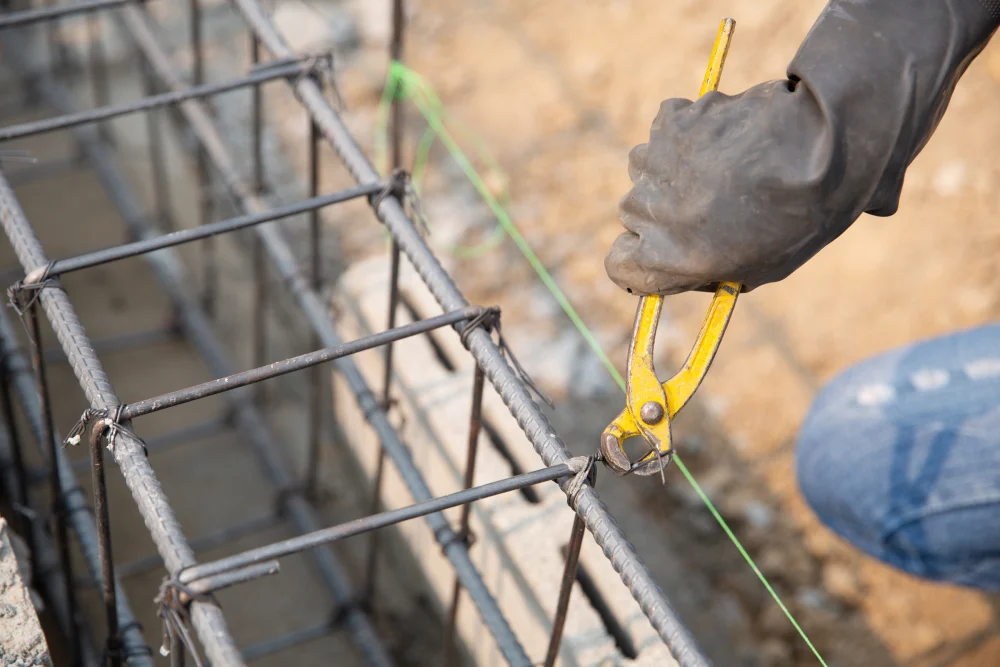
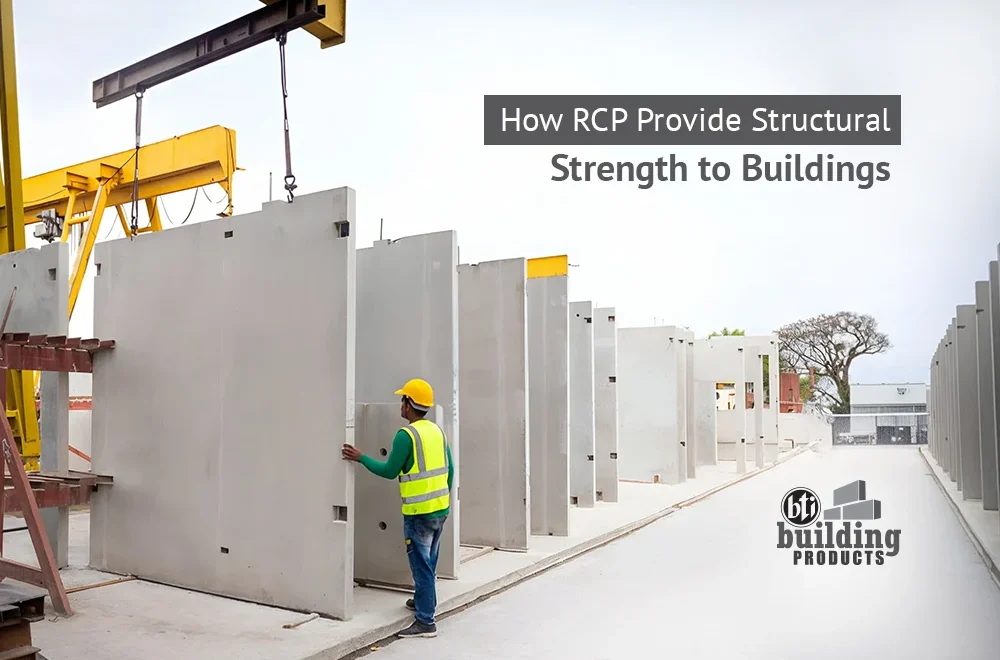
Reinforced Concrete Panels are pre-engineered concrete wall or façade panels strengthened with steel reinforcement. Manufactured in controlled environments and assembled on-site, RCPs offer efficiency, precision, and durability that remains unparalleled.

steel bar site construction

They can function as structural wall systems, façade cladding, and load-bearing or non-load-bearing elements. This versatility makes them ideal for modern architectural demands.

One of the biggest advantages of RCPs is that it makes construction much more efficient than it would otherwise be. Since panels are made on-site at each project, multiple phases of construction can run simultaneously. Benefits of more efficiency include rapid completion of projects, reduced on-site labor, minimal weather-related delays, and consistent quality control. RCPs give us an absolute advantage in the real estate industry, where time equals money.

Next, we know that RCPs are engineered for high performance. Their reinforced composition gives them great load=bearing capacity, superior resistance to fire, moisture and earthquakes, as well as long-term durability with little to no maintenance.

As the need for taller buildings grows with rising demand for improved housing facilities, RCPs simultaneously become even more important as they support safer, stronger, and more resilient structures. Contrary to the perception that concrete limits creativity, RCPs offer great flexibility of design. Architects using RCPs can achieve modern yet clean façades, custom patterns, textures and finishes, large, continuous spans, seamless integration with glass, steel, and other materials. RCPs allow architecture to be bold, expressive, and contemporary, without sacrificing function.

Sustainability is no longer optional, and RCPs align well with green building principles.

steel bar site construction


Their environmental advantages include lesser waste of materials, reduced noise, better heat insulation, and longer life cycles of buildings. By improving energy efficiency and minimizing construction waste, RCPs contribute to responsible urban development.

As RCPs are produced in controlled settings on-site, they offer a level of accuracy that is incomparable. This will allow uniform finishes to be achieved at the cost of fewer structural inconsistencies, improved alignment across façades and floors, and reduced need for reworking due to errors. Architects and developers will be able to predict better outcomes and higher-quality buildings.

RCPs are especially well-suited for high-rise residential buildings, commercial spaces, educational institutions, as well as hospitality and healthcare structures. RCPs are modular, meaning that designs can be scaled up or down, and be repeated over and over. Reinforced Concrete Panels represent a shift in how architecture is conceived and executed. RCPS offers efficiency, super-strength, freedom of design and sustainability all in one, enabling architects to build smarter, safer and more future-ready spaces. Reinforced Concrete Panels are now at the forefront of modern architecture, shaping the buildings of tomorrow. RCPs are leading the way in helping us build faster, smarter and even better buildings than before.

Using Pavement Tiles for Landscaping in Buildings
Architecture & Building

Using Pavement Tiles for Landscaping in Buildings

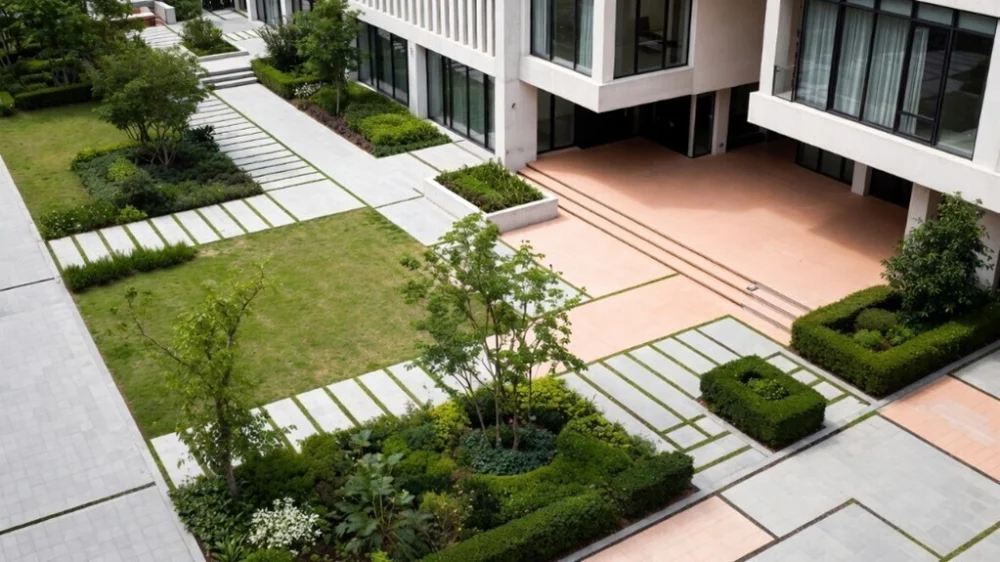
In modern construction and smart urban development, pavement tiles have become a popular choice for outdoor landscaping. From residential spaces to large commercial complexes; architects and developers are gradually moving from plain concrete surfaces and opting for solution that offers better durability and sustainability.

Also known as outdoor pavers or interlocking tiles, pavement tiles offer suitable balance of strength, aesthetics and functionality. From driveway to walkway, courtyard, rooftop terrace, and open seating areas, pavement tiles have the ability to transform outdoor spaces to completely redefine outdoor environments. Although poured concrete may appear cheaper initially, pavement tiles prove to be a smarter investment over time.

Let’s explore the creative uses of pavement tiles to design attractive and functional  landscapes for buildings.


Creative Landscaping Design Ideas with Pavement Tiles

Uses of pavement titles

Pavement tiles offer endless opportunities for creative outdoor design. Below are a few popular ideas to inspire your next landscaping project:

Stepping-Stone Layouts for a Natural Look

Large pavement tiles placed in between- filled with grass, gravel or pebbles create a relaxed and natural appearance. This design works well for garden walkaways and courtyards improving drainage.

Zoned Designs for Functional Outdoor Areas

Using different pavement tile colors or textures helps define zones such as walkways, seating areas, play spaces or outdoor dining zones: making this approach ideal for apartment complexes, office buildings and community spaces.

Geometric Patterns for Visual Impact

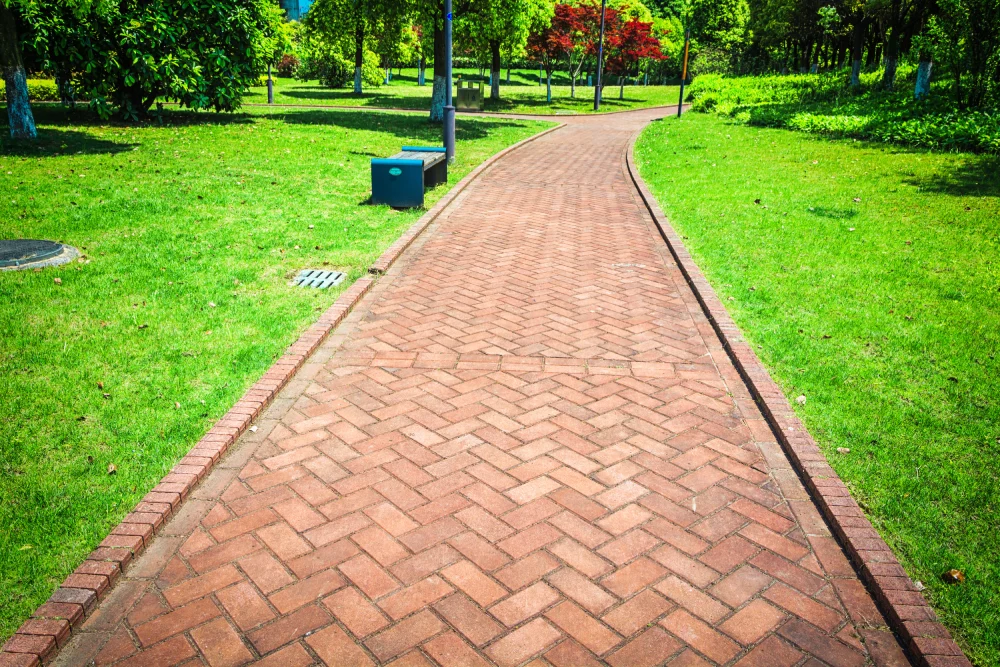
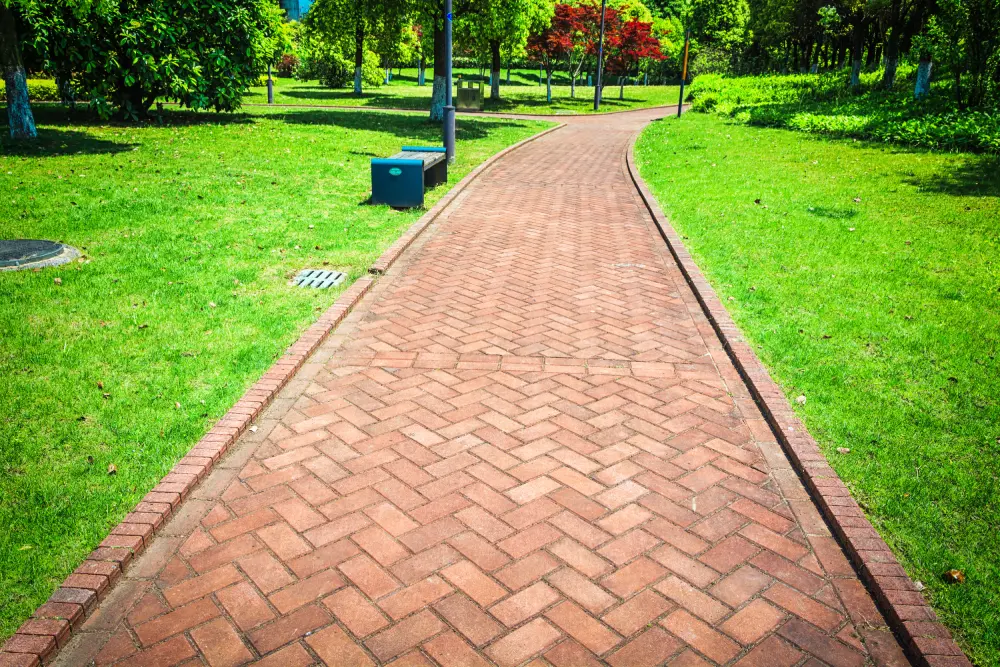
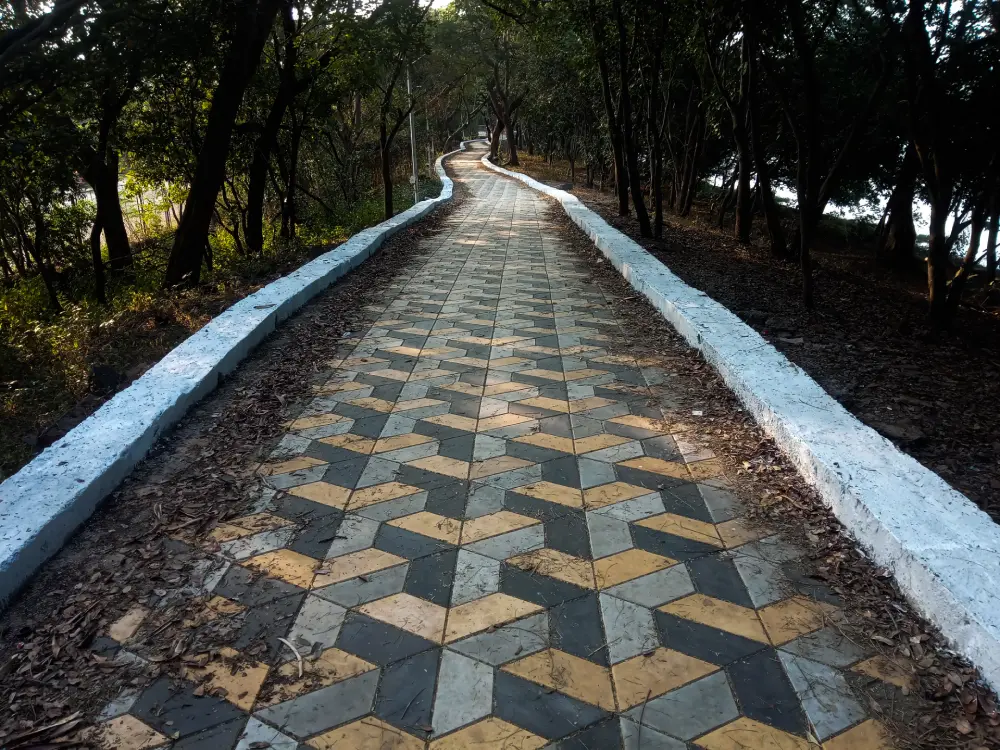
Patterns like herringbone, chevron, circular or angular layouts add a strong visual look to outdoor spaces. These designs work well for driveways, courtyards and building entrances.

Mixed Materials for Texture and Contrast

Combining pavement tiles with stone, wood elements, greenery or gravel adds richness to outdoor spaces creating a refined and balanced aesthetic.

Vertical Applications for Added Character

Pavement tiles can also be used on accent walls, boundary walls, raised planters, and outdoor facades, introducing architectural interest beyond floor level.


Using pavement tiles for landscaping building is more than a design trend—it’s a long-term investment. With superior durability, easy maintenance, wide design options and eco-friendly benefits, pavement tiles enhance both the appearance and functionality of outdoor spaces.

Whether you’re planning a new development or upgrading an existing property, pavement tiles help create outdoor environments that are beautiful, functional and built to last. Choosing the right pavement tiles can complement your building’s style for years to come.

Best Architectural Uses for Unipavers and Pavement Tiles
building products

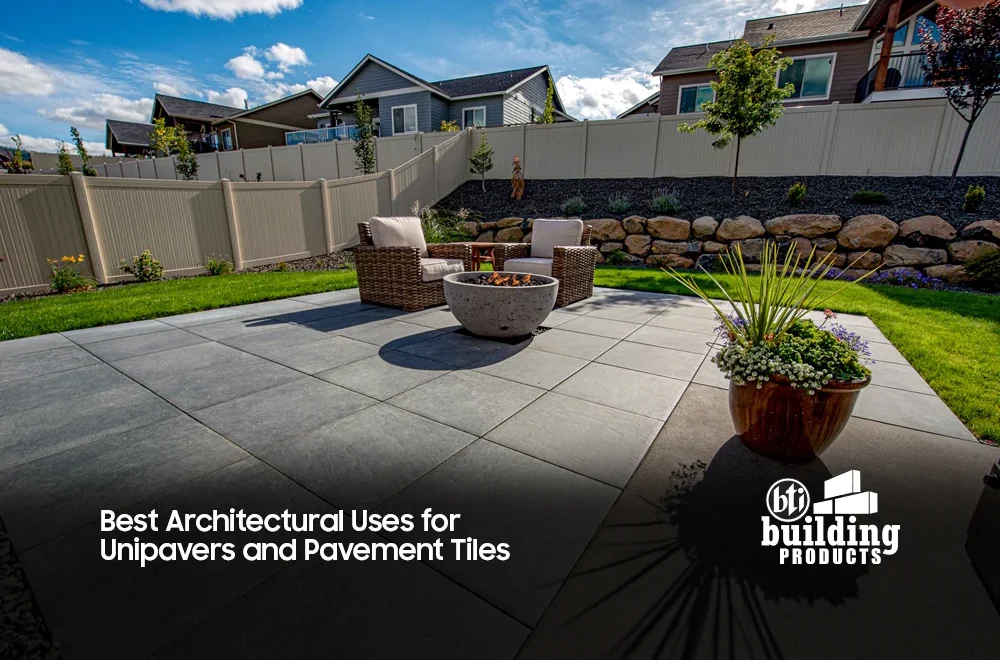
Best Architectural Uses for Unipavers and Pavement Tiles

In modern architecture, outdoor surfaces are no longer just functional—they are a key part of visual identity, sustainability, and user experience. Unipavers and pavement tiles have emerged as versatile design elements that balance durability with aesthetics, making them a preferred choice for architects, planners, and developers.

From residential landscapes to large urban projects, here’s a look at the best architectural uses for unipavers and pavement tiles.

1. Parking Areas & Driveways

Unipavers are ideal for being used in driveways due to their high load-bearing capacity and resistance to wear. Unlike traditional concrete blocks, they distribute weight evenly, reducing the risk of cracking in the structure. Architecturally, they offer flexibility in patterns, textures, and colors—allowing driveways to complement the overall façade of a building.

For parking areas in residential complexes or commercial developments, pavement tiles can be used to create organized, visually appealing layouts while ensuring long-term durability.

2. Pedestrian Paths & Walkways

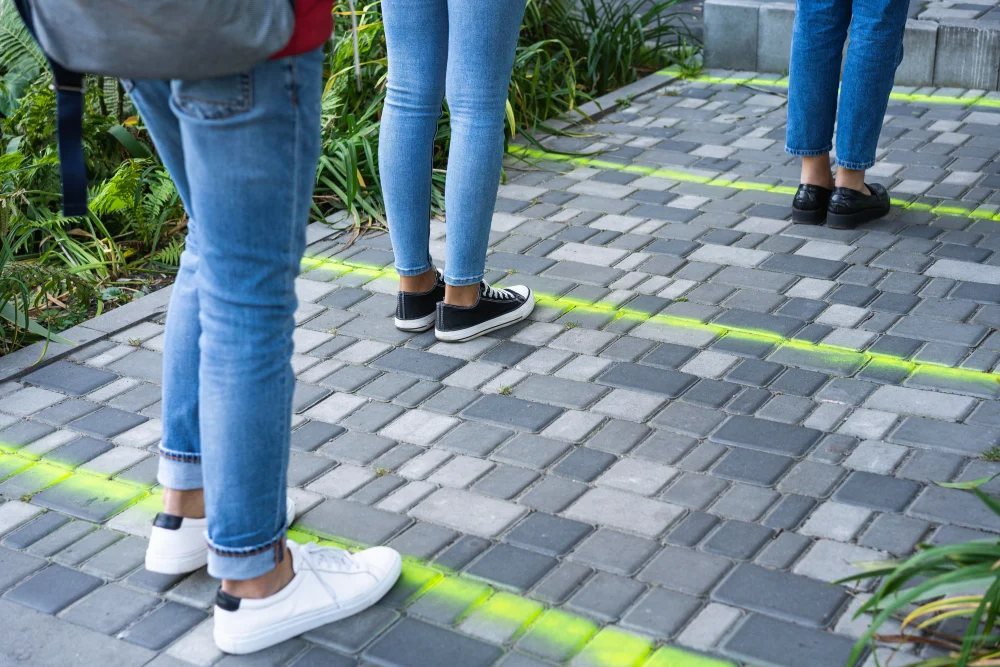
Walkways are transition spaces connecting buildings with nature and movement. Pavement tiles provide a clean, uniform surface that enhances safety and accessibility. Architects often use contrasting colors or patterns to subtly guide flow of pedestrians, define zones, or highlight entrances.

In urban projects, Unipavers also support easy maintenance—individual units can be replaced without disrupting the entire pathway.

uses of pavement tiles

3. Open-to-Sky Spaces & Courtyards

Courtyards are focal points in residential and commercial architecture. Using Unipavers or decorative pavement tiles here adds texture and rhythm to open spaces. Patterns such as herringbone, basket weave, or geometric layouts elevate the visual appeal; all while maintaining a grounded, earthy feel.

These surfaces also perform well in outdoor conditions, making them suitable for semi-open spaces exposed to sun and rain.

4. Rooftop Terraces and Podium Levels

As vertical living is gaining popularity, rooftops and podium decks are becoming active social spaces. Lightweight pavement tiles designed for elevated areas are now also being used to create walkable, elegant surfaces without overloading the structure. Architects often pair neutral-toned tiles with greenery, seating, and pergolas to design inviting rooftop environments for relaxation and gatherings.

5. Garden Paths & Landscape Design

Unipavers play a major role in landscape architecture. Garden paths, seating zones, and transitional areas benefit from textured Unipavers that blend seamlessly with grass, gravel, and planting beds.

Permeable Unipavers are especially valuable in sustainable design, as they allow rainwater to seep through the surface, reducing runoff and supporting natural drainage.

uses of pavement tiles

6. Entry Forecourts & Commercial Plazas

First impressions matter in commercial architecture. Pavement tiles are frequently used in entry plazas, forecourts, and drop-off zones to create a strong visual statement. Large-format tiles offer a contemporary look, while patterned Unipavers add character and depth to expansive outdoor areas.

These materials also withstand heavy foot traffic, making them suitable for malls, offices, hospitals, and institutional buildings.

7. Recreational Areas & Pool Decks

For poolside areas and recreational zones, slip-resistant pavement tiles are a practical and aesthetic choice. Their textured finish enhances safety, while lighter shades help reduce heat absorption. Architects often use these tiles to visually unify pools, decks, and lounge areas into a cohesive design language.

8. Public Spaces & Urban Streetscapes

In urban design, Unipavers are widely used for sidewalks, pedestrian streets, and public squares. Their modular nature allows for creative layouts, easy repairs, and long-term cost efficiency. From heritage zones to modern city developments, pavement tiles help define public spaces that are durable, functional, and visually engaging.

Unipavers and pavement tiles both provide architects with the freedom to design outdoor spaces that are strong, sustainable, and aesthetically refined. Their adaptability across scales—from private residences to large commercial developments—makes them an essential material in contemporary architecture.

When thoughtfully selected and skillfully installed, these surfaces do more than pave the ground—they shape experiences, enhance environments, and elevate the architectural narrative of the nation.

RCP Provides Structural Strength to Buildings
building products

How RCP Provides Structural Strength to Buildings

In modern construction, the demand for durability, safety, and efficiency has driven the evolution of advanced building materials. Among these, Reinforced Concrete Panels (RCP) have emerged as a reliable and high-performance solution for strengthening building structures. Widely used in residential, commercial, and industrial projects, RCP combines the inherent strength of concrete with the tensile capacity of steel reinforcement, resulting in a structural system that performs exceptionally under diverse loads and conditions.

Understanding Reinforced Concrete Panels (RCP)

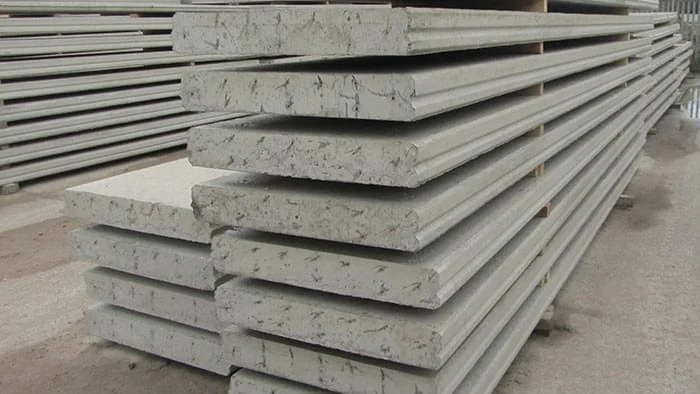
Reinforced Concrete Panels (RCP) are precast or cast-in-situ concrete elements embedded with steel reinforcement. The concrete provides compressive strength, while the steel reinforcement resists tensile forces. This composite action allows RCP to withstand bending, shear, and dynamic loads more effectively than conventional masonry or plain concrete elements.As engineered building materials, RCPs are manufactured under controlled conditions, ensuring consistent quality, dimensional accuracy, and structural reliability.

How RCP Enhances Structural Strength

concrete panels

  1. Composite Action of Concrete and Steel

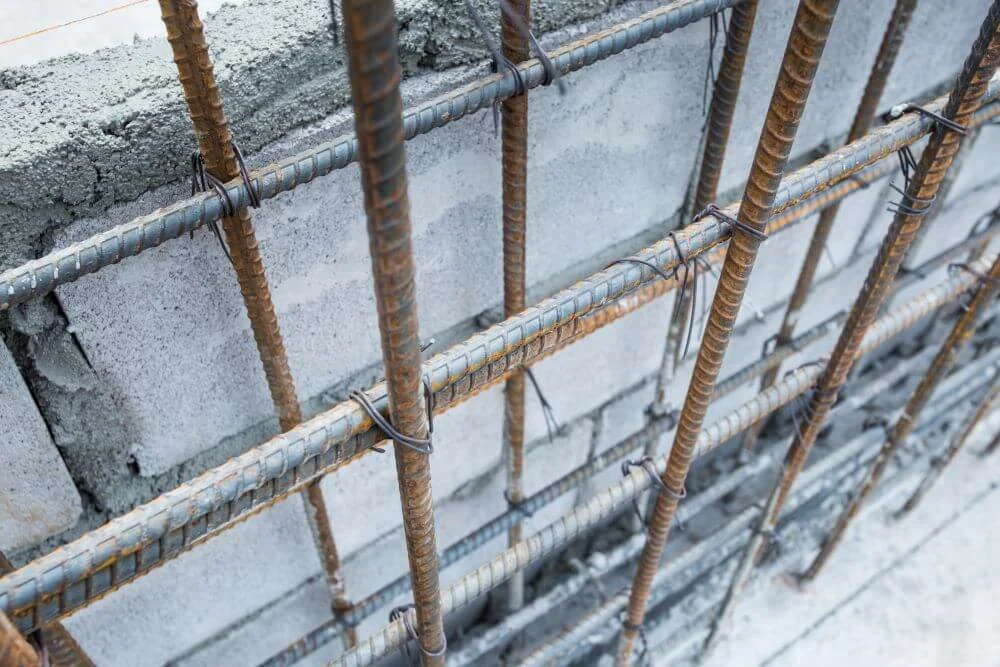
Concrete is inherently strong in compression but weak in tension. Steel reinforcement compensates for this limitation by carrying tensile stresses. In RCP, the bond between concrete and steel ensures load sharing, preventing cracks from propagating and maintaining structural integrity under stress.

  1. Load Distribution and Stability

RCP act as load-bearing or semi-load-bearing elements, efficiently transferring vertical and lateral loads to the foundation. When used in walls, floors, or façades, these panels distribute loads uniformly, reducing stress concentrations and enhancing overall building stability.

  1. Resistance to Lateral Forces

Buildings are frequently subjected to lateral forces such as wind loads and seismic activity. Reinforced Concrete Panels provide rigidity and ductility, enabling structures to absorb and dissipate energy during earthquakes or high wind events. This makes RCP particularly suitable for high-rise buildings and structures in seismic zones.

  1. Crack Control and Durability

The steel reinforcement in RCP limits crack widths caused by shrinkage, temperature variation, or external loads. Controlled cracking not only preserves structural strength but also enhances durability by preventing moisture ingress and corrosion, extending the building’s service life.

Structural Performance Advantages of RCP

  • High Load-Bearing Capacity: Suitable for both vertical and horizontal structural elements.
  • Fire Resistance: Concrete’s non-combustible nature provides inherent fire protection, safeguarding the steel reinforcement.
  • Long-Term Durability: Resistant to weathering, corrosion (when properly designed), and environmental degradation.
  • Dimensional Stability: Maintains shape and alignment under sustained loads.

These attributes position RCP as one of the most dependable building materials in contemporary construction.

Uses of RCP in Building Construction

Reinforced Concrete Wall

The uses of RCP span a wide range of structural and non-structural applications:

  • Load-Bearing Walls
    RCP is commonly used as load-bearing walls in residential and commercial buildings, replacing traditional brick or block masonry while offering superior strength and faster construction.


  • Floor and Roof Systems
    Precast reinforced concrete panels are extensively used in floor slabs and roof decks, providing high stiffness, reduced deflection, and excellent load-carrying performance.


  • Shear Walls
    In high-rise structures, RCPs function as shear walls that resist lateral forces and control building sway, significantly improving seismic performance.


  • Façade and Cladding Panels
    While often non-load-bearing, façade RCP still contributes to structural rigidity and protects the building envelope from environmental stresses.


  • Industrial and Infrastructure Projects
    Warehouses, factories, parking structures, and utility buildings rely on RCP for their ability to support heavy loads and endure demanding operational conditions.

RCP and Construction Efficiency

Beyond strength, Reinforced Concrete Panels support efficient construction practices. Precast RCP reduces on-site labor, minimizes construction time, and ensures consistent quality. This efficiency lowers project risks while maintaining high structural standards, making RCP a preferred choice for large-scale developments.

Role of RCP in Sustainable Construction

As advanced building materials, RCP also contributes to sustainability. Their durability reduces the need for frequent repairs, while factory-controlled production minimizes material waste. When designed efficiently, RCP systems can also improve thermal performance, supporting energy-efficient buildings.

Conclusion

Reinforced Concrete Panels (RCP) play a critical role in providing structural strength to buildings. Through the combined action of concrete and steel, RCP delivers high load-bearing capacity, resistance to lateral forces, durability, and long-term performance. Their versatility and reliability have established them as essential building materials in modern construction.

From load-bearing walls and shear systems to floors and façades, the uses of RCP continue to expand as the construction industry prioritizes strength, safety, and efficiency. As urban development grows and structural demands become more complex, Reinforced Concrete Panels will remain a cornerstone of resilient and high-performance building design.

Recycling Hollow Blocks in Construction Work
building products

Recycling Hollow Blocks in Construction Work

The construction industry is undergoing a critical shift toward sustainability, driven by rising material costs, environmental regulations, and growing awareness of responsible building practices. Among various construction materials, hollow blocks stand out not only for their structural efficiency but also for their recyclability. Hollow block recycling is increasingly becoming a practical solution for reducing construction waste, conserving resources, and promoting environmentally conscious development.

Understanding Hollow Blocks in Construction

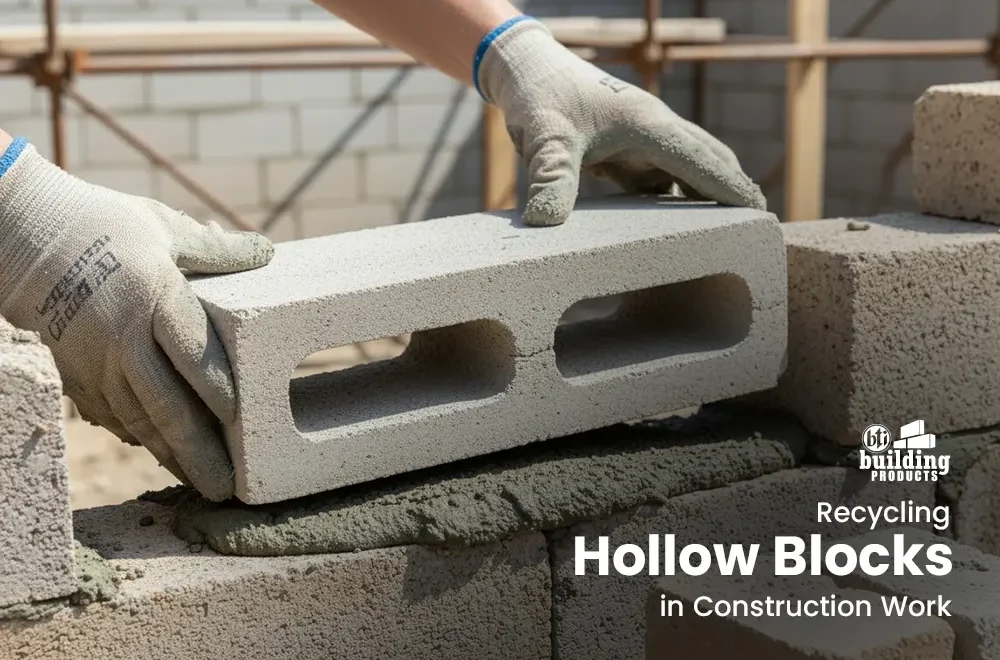
Hollow blocks are widely used in residential, commercial, and industrial construction due to their lightweight structure, durability, thermal insulation, and cost efficiency. Their internal voids reduce material usage while maintaining structural strength, making them a preferred alternative to solid concrete blocks.

However, like all construction materials, hollow blocks can generate waste during demolition, renovation, or surplus from construction sites. Recycling these blocks helps convert potential waste into valuable reusable resources.

Why Recycling Hollow Blocks Matters

worker builds hollow block for new home

Construction and demolition waste account for a significant portion of landfill pressure worldwide. Recycling hollow blocks directly addresses this issue by:

  • Reducing landfill waste
  • Conserving natural resources such as sand, stone, and cement
  • Lowering carbon emissions associated with new material production
  • Cutting down construction costs through material reuse

By integrating hollow block recycling into construction workflows, developers can align with green building standards and sustainability goals.

How Hollow Blocks Are Recycled

Recycling hollow blocks is a systematic process that transforms discarded blocks into reusable construction material. The typical steps include:

  • Collection and Sorting
    Broken, damaged, or unused hollow blocks are collected from construction or demolition sites and separated from other waste materials.


  • Crushing and Processing
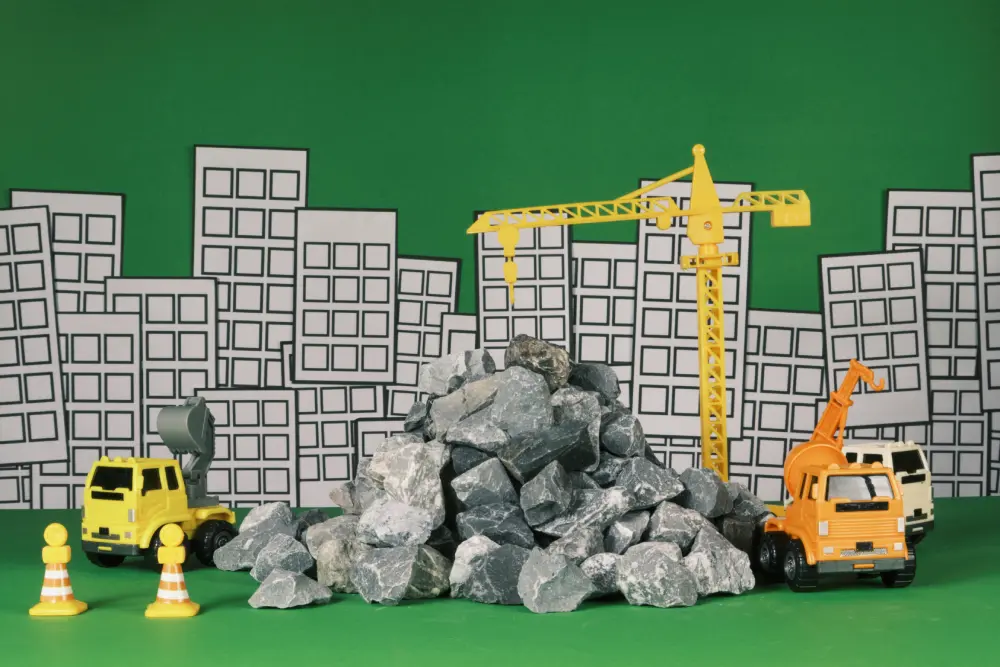
    The blocks are crushed into aggregates of varying sizes using mechanical crushers. These recycled aggregates can replace natural aggregates in many construction applications.


  • Screening and Quality Control
    The crushed material is screened to ensure uniform size and tested for strength and usability.


  • Reuse in New Construction
    Recycled hollow block material can be used in road sub-bases, non-structural concrete, pavement blocks, boundary walls, and even in the manufacturing of new hollow blocks.

Applications of Recycled Hollow Blocks

Recycled hollow block materials are versatile and can be used across multiple construction activities:

  • Manufacturing new hollow blocks
  • Road base and sub-base layers
  • Backfilling and leveling work
  • Non-load-bearing walls
  • Landscaping and outdoor paving

This reuse not only reduces raw material dependency but also ensures optimal utilization of existing resources.

Environmental Benefits of Hollow Blocks Recycling

The environmental impact of recycling hollow blocks is substantial:

  • Lower Carbon Footprint: Recycling requires less energy than producing new concrete blocks from raw materials.
  • Reduced Resource Extraction: Decreases demand for quarrying sand and stone.
  • Waste Minimization: Prevents construction debris from ending up in landfills.
  • Support for Green Certification: Encourages compliance with LEED and other green building standards.

For developers and contractors, adopting recycling practices strengthens their commitment to sustainable construction.

Economic Advantages for Builders and Developers

Toy models simulation construction industry real estate development

Beyond environmental responsibility, recycling hollow blocks offers tangible economic benefits:

  • Reduced disposal and transportation costs
  • Lower material procurement expenses
  • Improved project efficiency through on-site recycling
  • Enhanced brand reputation for sustainable practices

In markets where construction material prices fluctuate, recycled materials offer a stable and cost-effective alternative.

Challenges in Recycling Hollow Blocks

Despite its advantages, hollow blocks recycling faces certain challenges:

  • Initial setup cost for recycling equipment
  • Need for proper segregation at construction sites
  • Quality control to meet structural standards
  • Limited awareness and technical expertise in some regions

However, with proper planning, investment, and regulatory support, these challenges can be effectively addressed.

The Future of Hollow Block Recycling

As sustainable construction becomes a priority, recycling hollow blocks will play an increasingly important role. Innovations in crushing technology, improved material testing, and growing demand for eco-friendly buildings are accelerating the adoption of recycled construction materials.

Forward-thinking construction firms are already integrating recycling into their operations—setting benchmarks for efficiency, sustainability, and responsible development.

Conclusion

Recycling hollow blocks in construction work is no longer an optional practice—it is a strategic necessity. By embracing hollow block recycling, the construction industry can significantly reduce environmental impact while improving cost efficiency and resource management.

As cities grow and construction demands rise, sustainable solutions like hollow block recycling will define the future of responsible building—ensuring progress that is both durable and environmentally sound.

Using Building Scrap Materials to Refurbish Homes
building products

Using Building Scrap Materials to Refurbish Homes: A Smart and Sustainable Choice

Introduction

In an age where sustainability meets creativity, using building scrap materials to refurbish homes has become more than just an eco-friendly trend; it’s a cost-effective and innovative way to add character to your space.

Across Bangladesh, homeowners and builders are discovering that leftover construction materials such as wood offcuts, metal frames, tiles, and reclaimed concrete can be repurposed beautifully to give homes a fresh new look without increasing waste.

1. What Are Building Scrap Materials?

Building scrap materials refer to leftover or excess items from construction sites, renovation projects, or demolitions. These can include:

  • Broken or surplus tiles
  • Wood planks and pallets
  • Metal rods, sheets, and frames
  • Concrete debris and bricks
  • Glass panels and fixtures
  • PVC and plastic piping

When sorted and reused properly, these materials can reduce construction waste and lower costs while adding a unique touch to your refurbishment project.

2. Why Reuse Scrap Materials in Home Refurbishment?

a. Cost Efficiency

Using scrap materials helps cut down on the cost of new supplies. Many of these can be repurposed with minimal processing, offering great value for budget-conscious homeowners and contractors.

b. Environmental Sustainability

Bangladesh’s construction sector generates thousands of tons of waste every year. By recycling and reusing building scrap, we can reduce landfill waste and conserve natural resources, a small step toward greener cities.

c. Unique Aesthetic Appeal

Reclaimed materials bring texture, colour, and history into your home. Imagine a feature wall made of old bricks or a rustic coffee table built from salvaged wood; every piece tells a story.

3. Creative Ways to Reuse Building Scrap Materials

a. Upcycle Old Wood into Furniture

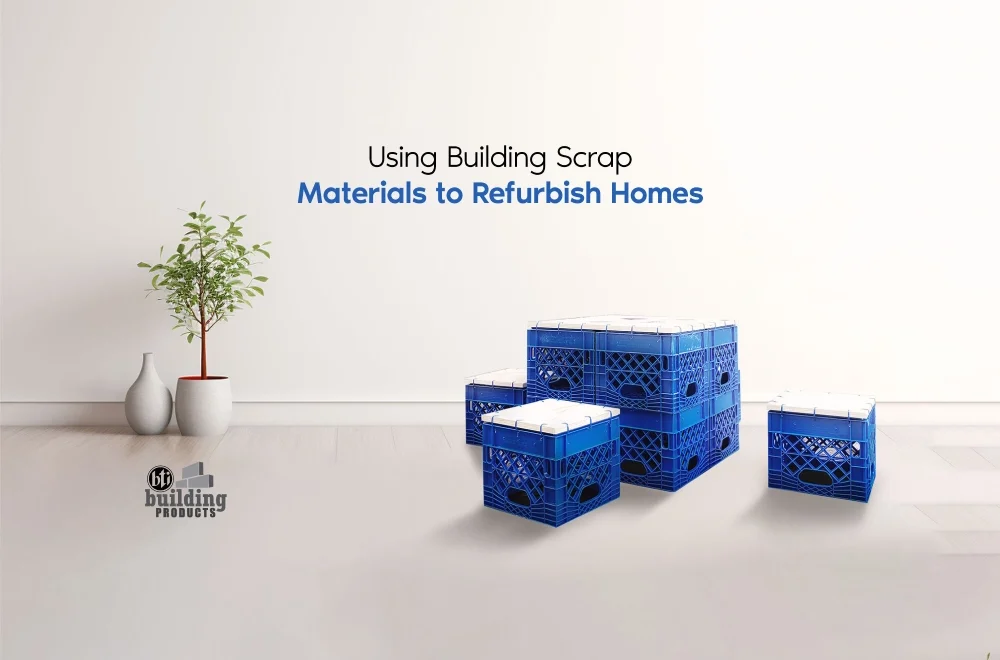
Old doors, window frames, and wooden pallets can be transformed into stylish shelves, benches, or tables. The natural grain of aged wood adds warmth and authenticity to interior spaces.

b. Reclaimed Bricks and Concrete

Broken bricks or concrete chunks can be reused to create garden pathways, boundary walls, or even outdoor seating areas. They add a rustic charm that new materials often can’t match.

c. Metal and Glass for Modern Touches

Metal scraps can be welded into light fixtures, railing designs, or decorative partitions. Similarly, recycled glass panels can be used creatively for skylights, windows, or room dividers.

d. Repurposed Tiles for Artistic Finishes

Use leftover tiles to create mosaic backsplashes, colourful tabletops, or bathroom wall accents. It’s an affordable way to introduce vibrancy and art into your home.

4. Safety and Preparation Tips

Before using any scrap material, make sure to:

  • Inspect for structural damage, rust, or decay.
  • Clean and sanitise thoroughly, especially in the case of wood or glass.
  • Consult professionals for load-bearing structures.
  • Seal and treat reclaimed wood to prevent termites or moisture damage.

Conclusion

Refurbishing your home using building scrap materials isn’t just an act of creativity — it’s a commitment to a greener and smarter way of living. When combined with quality materials from bti Building Products, your refurbishment project can achieve both aesthetic excellence and environmental responsibility.

Unipavers be Used to Fight Waterlogging in Dhaka
Unipavers

Can Unipavers be Used to Fight Waterlogging in Dhaka?

Dhaka, the heart of Bangladesh, has long struggled with one recurring urban challenge — waterlogging. Each monsoon brings with it flooded streets, stalled traffic, and disrupted lives. Despite continuous urban development, poor drainage systems and rapid unplanned construction have exacerbated the situation. As city planners and construction experts seek sustainable solutions, one question stands out: Can Unipavers help mitigate waterlogging in Dhaka?

Let’s explore what Unipavers are, their key uses, and how they can play a vital role in improving Dhaka’s drainage and urban resilience.

What Are Unipavers?

Unipavers are interlocking concrete blocks that are widely used for outdoor paving applications. Unlike traditional concrete slabs or asphalt, Unipavers are designed with small gaps and joint patterns that allow water to seep through or drain efficiently. Their modular nature makes them easy to install, maintain, and replace, while their strength ensures durability under heavy loads.

In Bangladesh, Unipavers are commonly used for driveways, walkways, parking lots, and open spaces. They come in various shapes, colors, and textures — enhancing both functionality and aesthetics.

Uses of Unipavers

The uses of Unipavers extend far beyond beautification or surface stability. These versatile blocks serve multiple practical purposes in urban design and sustainable construction:

use of unipavers

  • Driveways and Parking Areas
    Unipavers provide a stable, non-slippery surface ideal for vehicles. Their interlocking pattern distributes weight evenly, reducing surface cracks and deformation. 
  • Pedestrian Walkways and Public Spaces
    They are used extensively in walkways, parks, courtyards, and sidewalks for both visual appeal and safety. 
  • Industrial and Commercial Zones
    Heavy-duty Unipavers are installed in factory yards and loading docks due to their ability to withstand substantial pressure and frequent movement. 
  • Eco-Friendly Urban Infrastructure
    Some Unipaver designs include permeable variants that allow rainwater to pass through, replenishing groundwater and preventing surface runoff.

How Unipavers Can Help Combat Waterlogging

To understand how Unipavers can be part of Dhaka’s waterlogging solution, it’s essential to focus on their permeability and drainage-friendly design.

  • Promoting Natural Water Absorption
    Unlike conventional concrete pavements, Unipavers can be laid with small gaps filled with sand or gravel, allowing rainwater to percolate into the soil below. This natural infiltration process reduces surface water accumulation and helps recharge underground water levels.
  • Reducing Surface Runoff
    In Dhaka, where impermeable surfaces dominate the landscape, rainwater often has nowhere to go but the streets. By replacing large stretches of impermeable roads and courtyards with Unipavers, we can significantly reduce surface runoff and the pressure on the city’s drainage system.
  • Enhancing Stormwater Management
    Permeable Unipavers work as miniature drainage systems. During heavy rain, water seeps through the paver joints, slowing down flow and minimizing flooding risks. When combined with a proper sub-base design, they can store and gradually release excess water into the soil or stormwater channels.
  • Ease of Maintenance and Repair
    One of the most practical advantages of Unipavers is their modular structure. If a section becomes clogged or damaged, it can be easily lifted, cleaned, and reinstalled without disturbing the rest of the pavement — an essential feature for managing long-term urban infrastructure.
  • Aesthetic and Environmental Benefits
    Apart from functional advantages, Unipavers enhance the beauty of roadsides, parks, and public areas. Using light-colored or reflective Unipavers can even help reduce heat absorption, contributing to cooler microclimates and better environmental quality.

Real-World Applications and Global Examples

Many developed cities have already adopted permeable paving systems to tackle waterlogging and improve stormwater management.

  • Singapore integrates porous pavements across parking areas and walkways as part of its sustainable urban drainage initiative. 
  • Tokyo has installed water-permeable paving in flood-prone neighborhoods to minimize surface flooding. 
  • Kuala Lumpur and Jakarta, cities facing similar monsoon challenges as Dhaka, are increasingly using Unipavers and other permeable materials to improve drainage and urban resilience. 

These global examples show that the technology is proven and effective — it’s now about adapting it strategically for Dhaka’s specific urban conditions.

Implementing Unipavers in Dhaka — The Way Forward

To maximize the benefits of Unipavers in Dhaka , careful planning and policy-level decisions are needed. Here are a few steps that can help:

road amidst trees park

  • Promote Permeable Designs in Urban Planning
    City authorities can make it mandatory to use permeable paving in parking lots, sidewalks, and open public spaces. This will gradually increase water absorption capacity across the city.
  • Encourage Private Developers
    Real estate developers and commercial property owners can play a key role by adopting Unipavers in driveways, building entrances, and landscapes. Beyond functionality, this also adds a touch of elegance to their projects.
  • Integrate with Drainage Networks
    For maximum efficiency, Unipaver installations should be integrated with underground drainage systems. This ensures smooth water flow even during heavy downpours.
  • Raise Public Awareness
    Homeowners and businesses can also benefit from Unipavers in their own premises. Replacing traditional concrete surfaces with Unipavers in courtyards or pathways can prevent localized flooding during rain.

Challenges to Consider

While Unipavers are an effective tool against waterlogging, they are not a standalone solution. Some challenges include:

  • Proper Installation: Incorrect laying or a lack of proper base materials can reduce permeability. 
  • Maintenance: Paver joints can get clogged with dirt or debris over time, reducing drainage efficiency. Regular cleaning and sand replacement are required. 
  • Cost Factor: Initially, Unipavers may seem more expensive than traditional concrete, but their long-term benefits and durability offset the cost.

Unipavers offer a sustainable, aesthetic, and practical solution to one of Dhaka’s most persistent urban problems — waterlogging. Their ability to allow water infiltration, reduce surface runoff, and support stormwater management makes them a valuable asset for modern city planning.

While Unipavers alone cannot eliminate waterlogging entirely, integrating them into urban infrastructure, residential complexes, and public spaces can significantly reduce the impact of heavy rains. By embracing such sustainable construction practices, Dhaka can move closer to becoming a cleaner, greener, and more resilient city.

Reusing Building Materials: Key to Sustainability in Architecture?
building products

Reusing Building Materials: Key to Sustainability in Architecture?

Construction and real estate use a majority of the resources available to us. The construction industry is one of the largest contributors to worldwide carbon emissions. The harmful effects caused by real estate and construction are not just limited to carbon emissions. They also create waste and deplete our already insufficient resources. As the demand for infrastructure grows with accelerating urbanization, architects and builders are feeling pressured to find sustainable solutions for a better tomorrow. Many conversations are centered upon green building technologies and energy-efficient designs, where it has been found that reuse of building materials could hold the key to sustainability.

Reusing existing materials can give them a second life, architects can reduce the impact on the environment and make construction more cost-effective in the long run. Let us explore deeper to see whether this might resolve the issue of sustainability in architecture.

1. Environmental Benefits

In global landfills, a major portion is made up of waste from construction sites. When existing materials are salvaged and reused, architects and developers can then drastically reduce waste while conserving natural resources. Reuse will also reduce carbon emissions associated with manufacturing and transporting new materials.

2. Economic Benefits

Reclaimed materials often cost less than brand new ones. For homeowners and real estate developers alike, this creates major savings, especially on large projects. Moreover, reusing materials can lower disposal costs as lesser waste goes to landfills.

 photorealistic timber house interior with wooden decor furnishings

3. Cultural and Aesthetic Value

Materials like reclaimed wood, vintage bricks, or ornate tiles add unique character to otherwise modern structures. They carry history and offer aesthetic qualities that brand-new materials often cannot replicate. Therefore, reuse is both soulful and sustainable.

4. Commonly Reused Materials in Architecture

Even though we cannot use all materials for reuse, but we can give many a second life with the correct care and treatment:

  • Wood: Reclaimed timber from old buildings is popularly used for flooring, furniture, and even structural use.
  • Bricks: Cleaned and repurposed old bricks add functionality with rustic charm.
  • Steel and Metals: Metals can be recycled due to their durable nature, making them perfect for reuse in beams, roofing, or even interior design.
  • Glass: Old windows and panels can be reprocessed into new glass products or creatively combined into designs.
  • Concrete: Concrete can be crushed and reused as aggregate for new construction.

5. Innovative Practices and Global Examples

Architects who like thinking ahead are now designing with reuse in mind. Some notable practices include:

  • Adaptive Reuse: Transforming old warehouses, factories, or heritage buildings into modern spaces while preserving their materials.
  • Circular Construction: Designing buildings that can be taken apart and recycled at the end of their lifecycle.
  • Material Banks: Keeping an inventory of salvaged materials for future use in new projects.

Many developing countries are rediscovering traditional reuse methods out of necessity and innovation.

empty black stairs pedestrian subway 3d render

6. Challenges of Material Reuse

Even when we decide to resume materials, we need to overcome certain obstacles:

  • Quality & Safety: When using reused materials, we must ensure that they meet modern building codes and safety standards – which can be a complex process.
  • Storage & Logistics: Dedicated infrastructure is required to collect, sort, and store salvaged materials.
  • Perception & Awareness: There are still certain developers and buyers who think of reused materials as lower quality, despite their proven durability and charm.

Innovation, supportive policies and a shift in the mindset in the real estate industry can, in combination, help us overcome these barriers.

7. The Future of Sustainable Architecture

Material resume and the future of sustainable design are forever intertwined. With advances like 3D printing, modular construction, and digital tracking of materials, architects can now even create buildings that are efficient and circular—designed for being taken apart and later reused.

Globally, many governments  are also beginning to recognize the significance of this practice, offering lucrative incentives for projects focusing on recycled and reclaimed materials. The more that sustainability becomes a standard, material reuse could indeed be the key to unlocking a greener future in architecture.

Reusing building materials is not just a measure for cutting costs or a design trend—it is a sure-shot commitment to environmental responsibility, cultural preservation, and sustainable innovation. In a world where resources are limited and climate challenges are becoming more nerve-wracking; giving materials a second life may easily be one of the most powerful keys to building a better, brighter future.

16604